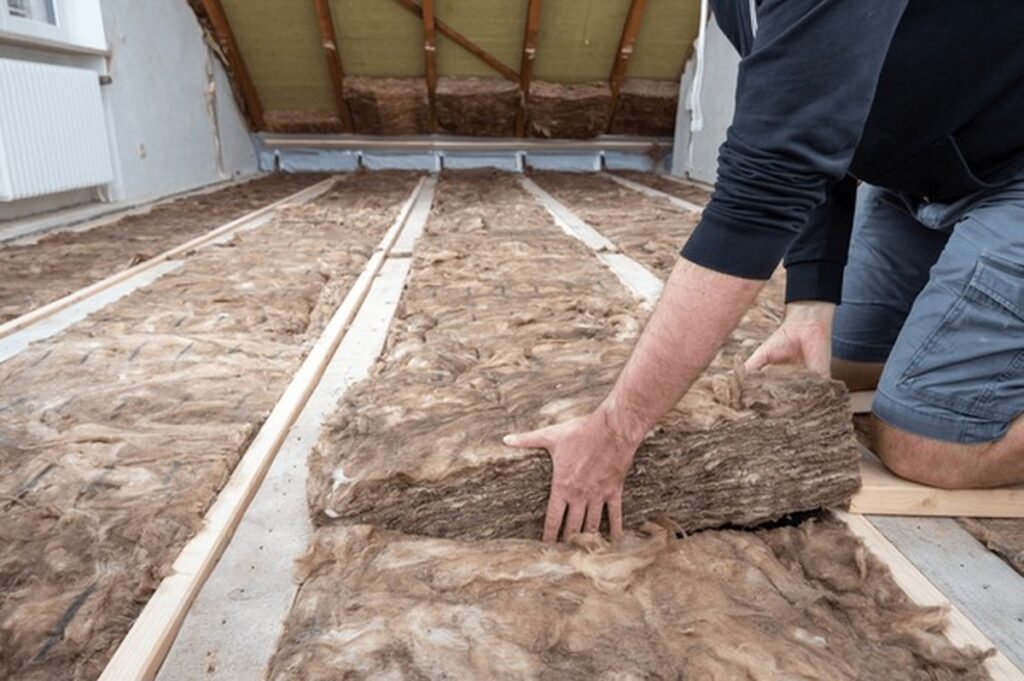
I get asked this all the time, usually by someone standing in their loft, torch in hand, staring at a messy layer of old fibres and wondering what on earth to do with it.
And the short answer? Yes, the type of loft insulation you choose makes a massive difference. To warmth. To comfort. To energy bills. Even though your home feels bitterly cold in January.
But let’s answer the main question straight away: the best types of loft insulation for your home depend on your loft layout, your budget, and the amount of heat loss you’re trying to tackle.
No single product wins in every scenario. Some materials are brilliant for awkward corners. Others are unmatched for topping up existing insulation. And a few are simply the most cost-effective options for standard UK homes.
I’ve spent years working with homeowners across the country through H&R Energy Solutions, dealing with everything from draughty Victorian roof spaces to new-build properties that still leak heat like an open window.
And I’ve learned one thing: people often underestimate how many types of loft insulations actually exist, or why one option might suit them way more than another
Why Loft Insulation Matters More Than People Think
You’ve probably seen the stat before: around 25% of a home’s heat escapes through the roof. I’ve inspected homes where that number feels closer to 40%.
If your loft is under-insulated, or insulated with something ancient and sagging, you’re bleeding heat. And money.
Good loft insulation does three things instantly:
- Cuts heat loss
- Helps stabilise temperatures (your boiler stops overworking)
- Lowers those ever-creeping energy bills
When the government recommends upgrading insulation as one of the most cost-effective home improvements, they’re not exaggerating.
And that brings us to the real question: what type of insulation is going to do that job best in your loft?
1 – Blanket Roll Insulation (Mineral Wool, Sheep’s Wool, And More)
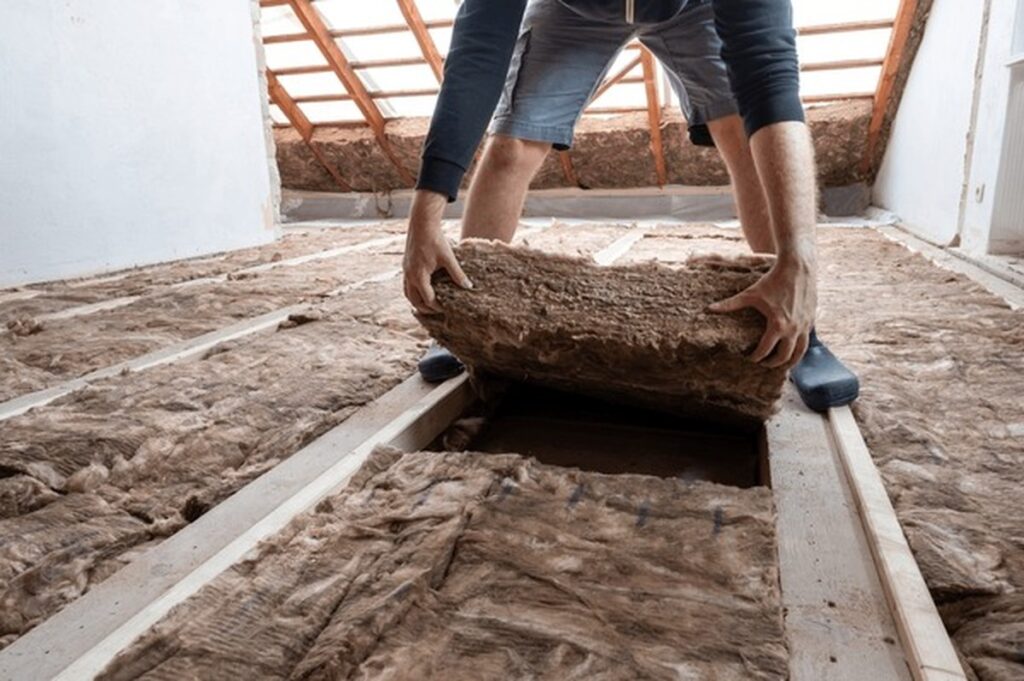
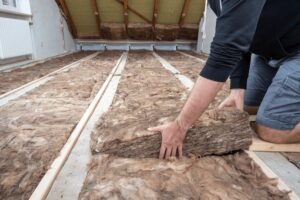
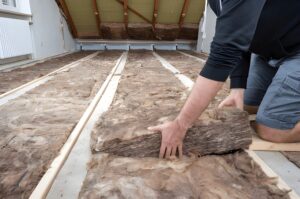
If you picture insulation in your head right now, you’re probably seeing blanket rolls. It’s the classic option, the one most homes already have tucked between the joists.
Mineral Wool (The UK favourite)
Mineral wool is made from spun recycled glass or rock fibres. In my experience, it’s still the most common because it’s affordable, reliable, and plenty fire resistant.
Pros:
- Quick and easy to install
- Good at noise reduction
- Works brilliantly for topping up existing insulation
- Widely supported in government schemes
Cons:
- Can irritate the skin and lungs during installation
- Not great for tight, awkward spaces
Sheep’s Wool (The Natural One)
If you’re into eco-friendly materials, sheep’s wool isn’t just trendy, it’s genuinely effective. I’ve seen older cottages benefit hugely from this, especially in damp-prone lofts.
Pros:
- Naturally breathable
- Moisture-regulating
- Long-lasting and very easy to install
Cons:
- Costs more than standard mineral wool
- Slightly lower insulation rating per mm
When are blanket rolls best?
- Traditional joist-style lofts
- Homes needing a cost-effective upgrade
- When your existing insulation is patchy or thin
Blanket rolls alone cover a surprising number of UK houses, but they’re not perfect for every shape or space.
Reddit Insight:
Some verified users at reddit said that blanket roll insulation would improve the insulation and reduce heat loss but it also becomes a home for mice and moths! So, it’s always best to check with your installer to know whether it’s a great idea to consider blanket roll insulation or not.
2 – Loose Fill Insulation (For Awkward Or Patchy Areas)
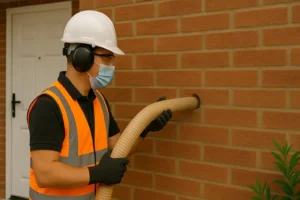
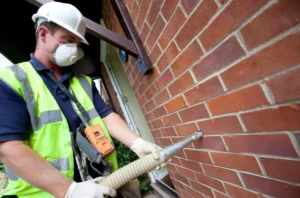
Loose fill insulation is exactly what it sounds like, small insulating materials you pour or blow into gaps. Think cellulose, granules, cork, mineral wool flakes. It’s the one I turn to when a loft is a bit of a puzzle.
Pros:
- Perfect for uneven spaces
- Great for filling tight corners
- Works well as a top-up
Cons:
- Can shift over time if disturbed
- Not ideal in draughty lofts unless combined with other materials
If you’ve got a loft with weird angles or old debris between the joists, loose fill is sometimes the only realistic way to achieve full coverage.
3 – Rigid Insulation Boards (High Performance But Less Forgiving)
Rigid boards, typically PIR or phenolic boards, are the heavyweight contenders of the insulation world.
You’ll know them by names like Celotex or Kingspan. These are the shiny, dense boards you see in new builds or loft conversions.
I’ve installed these plenty of times when someone wants their loft to become a clean, usable space. They’re brilliant at maximising insulation in thinner layers.
Pros:
- Very high insulation value
- Works well for loft conversions, rafters, and flooring
- Long-term durability
Cons:
- More expensive
- Requires precise cutting
- Not ideal for quick DIY jobs
If your loft is being transformed into a room, or you’re insulating the rafters instead of the floor, rigid boards are usually the go-to.
4 – Sheet Insulation (Similar To Rigid Boards But More Flexible)
Sheet insulation often gets mixed up with rigid boards, but it’s a slightly broader category that includes foam sheets, polystyrene boards, and other semi-rigid materials.
This type of loft insulation has a nice balance: sturdier than loose fill but more forgiving than the toughest boards.
Pros:
- Lightweight
- Easy to cut
- Good for flat surfaces and DIY projects
Cons:
- Not always as energy efficient
- It can degrade quickly depending on the type
I see sheet insulation used a lot when homeowners want something affordable but still tidy and structured.
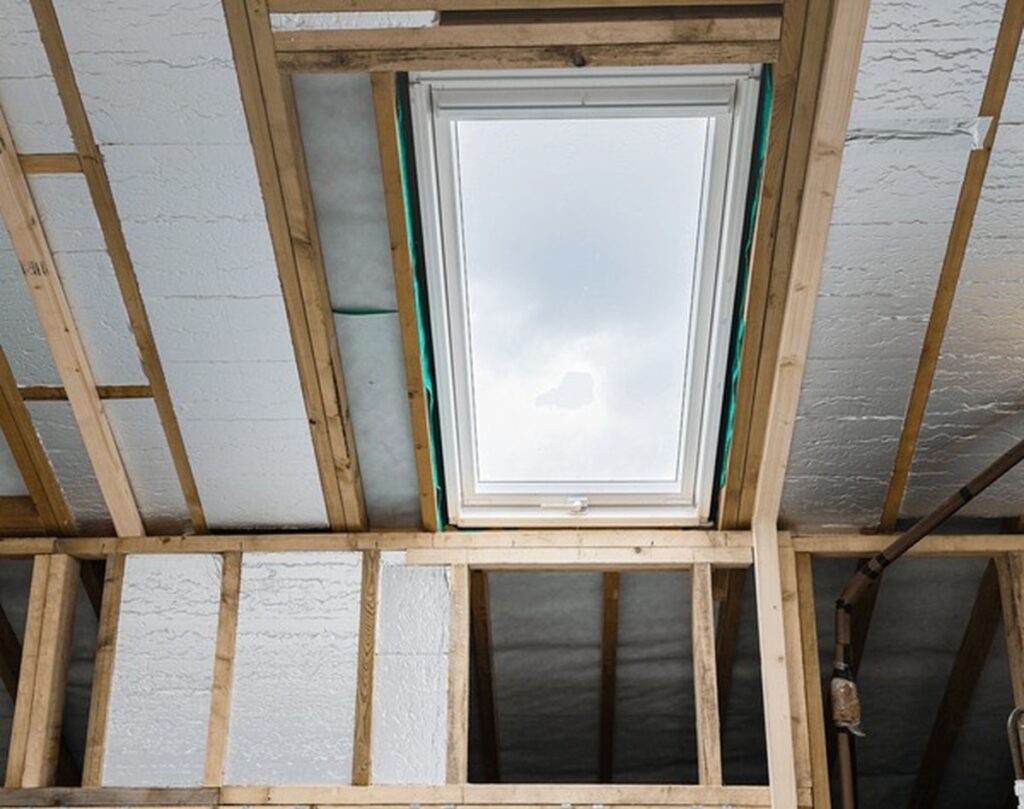
5 – Insulation For Loft Conversions (Insulating The Rafters)
If you’ve got, or plan to build, a room in your loft, floor insulation alone won’t cut it. You need rafter insulation.
The most common choices here are:
- Rigid insulation boards
- Multi-foil insulation (as a secondary layer)
- High-density mineral wool
You might be surprised how much heat loss happens through exposed rafters. When I work on loft conversions, rafters are often the first place I start.
Choosing The Best Types Of Loft Insulations For Your Home
This is where people usually want a simple Yes/No answer, “Which one should I get?” But the truth is, it depends on your loft type, how much insulation you already have, and what you’re trying to achieve.
Here’s a quick breakdown based on common UK situations:
| Insulation Type | Best For | Made from rock wool or recycled glass: highly fire-resistant | Pros | Cons |
|---|---|---|---|---|
| Mineral Wool Rolls | Very-Efficient, Space-Saving, Durable | Standard Loft Floors, topping up old insulation | Cost-effective, easy to install, excellent heat-loss reduction | Not ideal for cramped or uneven spaces |
| Sheep’s Wool | Eco-Friendly Upgrades: damp-prone lofts | Natural, Breathable, Moisture-Regulating | Long-Lasting, DIY-Friendly, Sustainable | Higher Cost: slightly lower insulation |
| Loose Fill Insulation | Awkward Corners, Uneven Lofts | Cellulose Or Mineral Wool Granules | Fills Gaps Rolls Can’t Reach, Great Top-UP Option | Sheet Insulation (Foam / Polystyrene |
| Rigid Insulation (PIR) | Loft Conversions, Rafter Insulation | High-Performance Insulation Boards | Can shift over time, not great in draughty lofts | Expensive, Requires Precise Cutting |
| Sheet Insulation, (Foam / Polystyrene | Light DIY Jobs, Flat Surfaces | Lightweight Insulating Material | Cheap, Simple To Fit | Lower Efficiency, Not Ideal For Whole-Loft Upgrade |
How To Know If Your Loft Needs An Upgrade?
Signs are usually obvious once you know what to look for:
- Bedrooms feel colder than the rest of the house
- Heating takes longer to warm the home
- Insulation looks thin, dusty, or uneven
- Your energy bills keep rising
- Your insulation is under 270mm thick (the UK standard)
A lot of older homes still have joist-level insulation from the early 2000s, and trust me, that stuff has seen better days.
What We Recommend At H&R Energy Solutions
Because every home is different, I tend to approach loft insulation with fresh eyes each time. But in general:
| For standard loft floors → | Mineral wool |
| For conversions or rafter insulation → | Rigid insulation |
| For tricky spaces or top-ups → | Loose fill |
| For eco-conscious upgrades → | Sheep’s wool |
And yes, we always check for ventilation, damp risks, and energy-saving potential before recommending anything. Insulation should make your home warmer, not cause moisture headaches later.
Is Professional Installation Worth It?
Some homeowners can install basic blanket insulation themselves, and that’s absolutely fine. But when it comes to loft conversions, multi-layer systems, or homes with uneven joists, professional installation saves time and prevents mistakes.
I’ve seen too many DIY jobs where:
- insulation was compressed (reducing performance),
- gaps were left around joists, or
- flammable materials sat too close to wiring.
A small mistake can cost you more heat than you think.
Frequently Asked Questions
1 – Can I mix different types of loft insulation?
You can, and many homeowners do. For example, mineral wool paired with loose fill insulation is a common combo when topping up existing insulation. Just keep the layers compatible and avoid blocking ventilation.
2 – What thickness does the government recommend for loft insulation?
In the UK, the recommended thickness is 270mm for mineral wool insulation. Other insulating materials may vary, but the goal is always the same, to reduce heat loss and keep energy bills down.
3 – Is loose-fill insulation good for DIY projects?
Yes, it’s one of the easiest types to install. You simply pour it into gaps where rolls or boards can’t sit properly. The only caveat is that draughty lofts can shift it over time, so sealing gaps first is important.
4 – Which type of loft insulation lasts the longest?
Rigid insulation boards typically have the longest lifespan because they don’t sag, compress, or shift easily. Mineral wool rolls also last for decades when installed properly and kept dry.
Final Thoughts
Here’s my honest take: the best loft insulation is the one that fits your home’s shape, your comfort goals, and your budget, not the one that looks best on paper.
Mineral wool is the UK all-rounder. Rigid boards win for performance and conversions. Loose fill solves the awkward bits, and sheep’s wool appeals to the eco-conscious crowd.
But if you’re still unsure, that’s why companies like H&R Energy Solutions exist. We’ve upgraded insulation for thousands of homeowners and can size up your loft, literally and figuratively, in minutes.
Good insulation isn’t just a home improvement. It’s comfort, warmth, and long-term savings rolled into one simple upgrade
You May Also Like Reading: